Lung cancer is one of the most common and deadly cancers in Singapore. It is the number one cause of cancer deaths among men, and is among the top 3 types of cancers that afflict both men and women.[1] The disease can affect both smokers and non-smokers, which is why early detection through appropriate screening and diagnostic tests is crucial.
What is Lung Cancer?
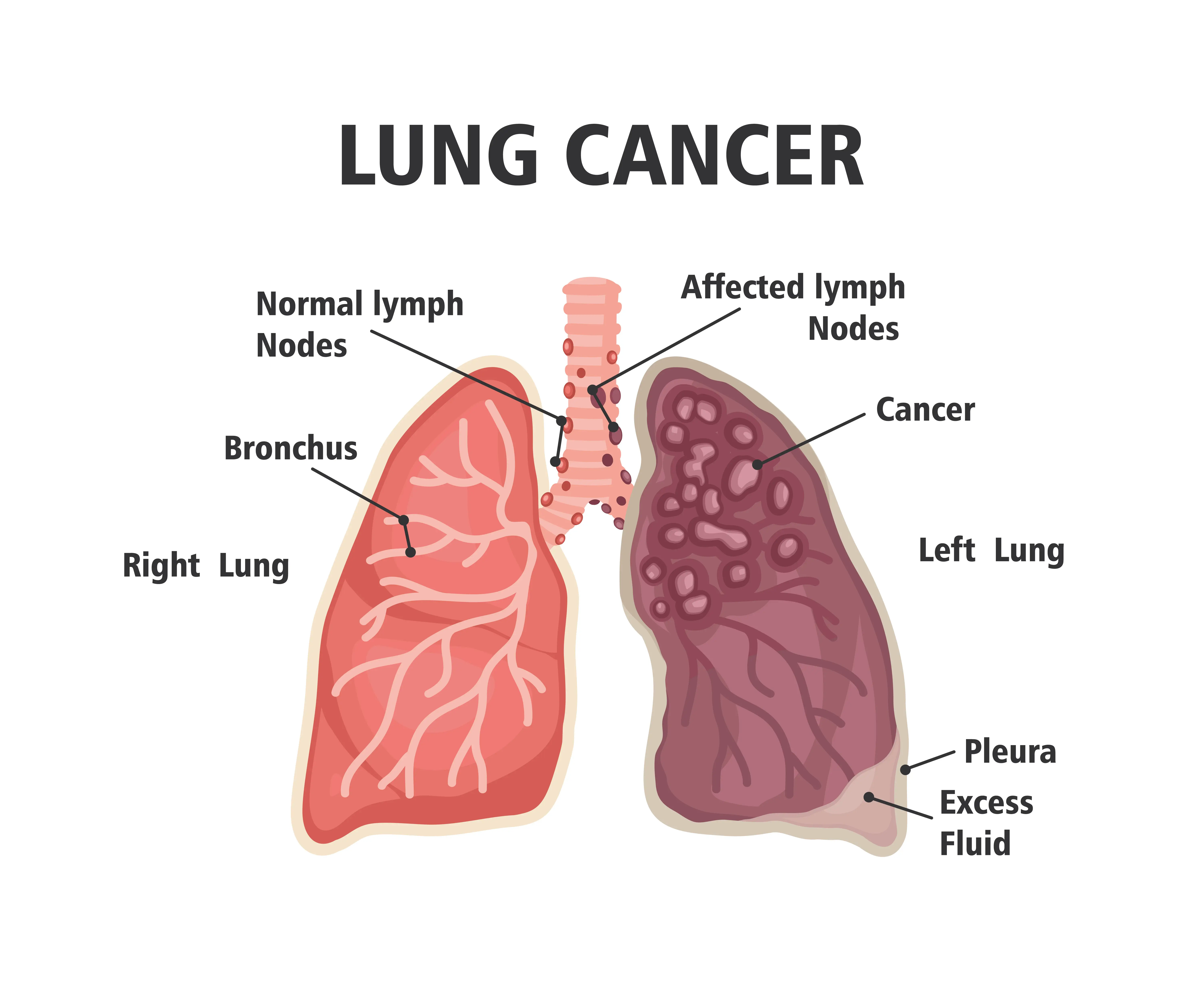
The lungs are the main organs of a person’s respiratory system, and are responsible for exchange of gases, during breathing, primarily to add oxygen remove carbon dioxide in the body. Lung cancer occurs when abnormal cells grow uncontrollably in the lung, forming a tumour mass that interferes with normal breathing and lung function.
In Singapore, lung cancer affects both smokers and non-smokers, with a notable proportion of cases occurring in people who have never smoked in their life, particularly among women. [2]
Early-stage lung cancer often presents with little or no symptoms, and many patients are diagnosed only when the disease is advanced.
Early Signs and Symptoms of Lung Cancer
Signs and symptoms of lung cancer may include:
- A persistent cough lasting more than a few weeks
- Chest pain
- Coughing up blood or blood-tinged phlegm
- Shortness of breath
- Unexplained weight loss or loss of appetite
- Fatigue or persistent tiredness
As these symptoms may also be caused by other lung conditions, any persistent or unexplained symptoms should be investigated further by a doctor.
Types of Lung Cancer
Lung cancer is classified into two main types: small cell lung cancer and non-small cell lung cancer. Non-small cell lung cancers are more common, afflicting up to 90 percent of lung cancer patients. They can affect non-smokers.
Small Cell Lung Cancer
Small cell lung cancer (SCLC) is strongly associated with smoking and is known for its rapid growth and early spread to other organs. Due to its aggressive nature, SCLC is often diagnosed at an advanced stage.
Non-Small Cell Lung Cancer
Non-Small cell lung cancer (NSCLC) is the most common type of lung cancer in Singapore. Compared to SCLC, this form of cancer generally progresses more slowly.
Who Should Consider Lung Cancer Screening in Singapore?
.webp?sfvrsn=2353afab_1)
Lung cancer screening may be recommended for individuals at higher risk, including:
- Current or former smokers
- Individuals with long-term exposure to second-hand smoke
- People with occupational exposure to carcinogens, such as asbestos
- Those with a family history of lung cancer
Tests Used for Lung Cancer Screening and Diagnosis
Doctors may use a combination of imaging, laboratory tests, and tissue analysis to confirm the diagnosis of lung cancer and guide treatment.
.webp?sfvrsn=511a81bf_1)
Imaging tests
Imaging tests are usually the first type of tests to be ordered by doctors when lung cancer is suspected. Such tests take “pictures” of the lung, so that doctors can look out for suspicious signs, such as spots or shadows on the lungs.
- Chest X-ray – A chest x-ray is often the first imaging test to be used to identify abnormalities in the lungs.
- Computerised Tomography Scan (CT) Scan – CT scans use x-ray beams which are rotated around the body to produce a series of images to show a complete picture of the body part that is being scanned. A CT scan is more sensitive than a normal x-ray, and can detect tumours that are smaller. For individuals at higher risk, low-dose CT (LDCT) is commonly used for lung cancer screening as it can detect early-stage tumours before symptoms develop.
While imaging tests help detect suspicious lesions, laboratory testing plays a critical role in confirming diagnosis, classifying tumour type, and supporting treatment decisions. Accurate sample handling, testing, and interpretation by trained laboratory professionals ensure that clinicians receive reliable information to guide patient care.
Tumour Markers
Tumour markers are blood tests that may provide supportive information in certain cases of lung cancer. They are not suitable for screening or for making a definitive diagnosis on their own. Instead, they are mainly used for disease monitoring and prognostic assessment, and are interpreted together with imaging scans and tissue-based tests.
- CEA (Carcinoembryonic Antigen) - A non-specific marker that may be elevated in some cancers, as well as in certain non-cancerous conditions such as smoking-related lung disease or liver disease. It is primarily used for monitoring known disease rather than detecting early cancer.
- CYFRA 21-1 – Most useful in selected subtypes of non-small cell lung cancer, particularly squamous cell carcinoma, for monitoring treatment response and providing prognostic information.
Tumour marker results must always be interpreted in the appropriate clinical context.
Cytology Tests
Cytology tests examine individual cells rather than tissue samples. They typically help support cancer diagnosis or pre-cancerous changes in cells.
- Sputum cytology – This is a test which examines cells under a microscope that are found in sputum (coughed up mucus). The test checks for abnormal cells, such as lung cancer cells.
- Pleural fluid cytology – Pleural fluid is found in the space between membranes that surrounds the lungs (pleural space). If there is fluid accumulation in this space, sample of the fluid can be taken using a procedure known as thoracentesis (pleural tap). The sample is then sent to a lab for examination under a microscope, to check for abnormal cells.
Histopathology
Histopathology is the microscopic study of tissue samples that are obtained from a biopsy. In Singapore, biopsies may be performed via minimally invasive techniques such as a bronchoscopy of CT-guided needle biopsy, to obtain lung tissue samples. The sample is then sent to the laboratory for a pathologist to analyse and understand the type of tumour and the grade of the tumour, which would guide treatment. If the lesion is strongly suspected to be malignant, a larger piece of tissue may be removed for assessment by VATS (video-assisted thoracic surgery).
Conclusion
Understanding lung cancer symptoms and seeking timely medical evaluation are essential steps toward better outcomes. If you are at risk or experiencing persistent lung-related symptoms, consult a primary care doctor or specialist in Singapore to discuss lung cancer screening and further investigations.
References
[1] Singapore Cancer Registry Annual Report 2023
[2] HealthXChange.sg